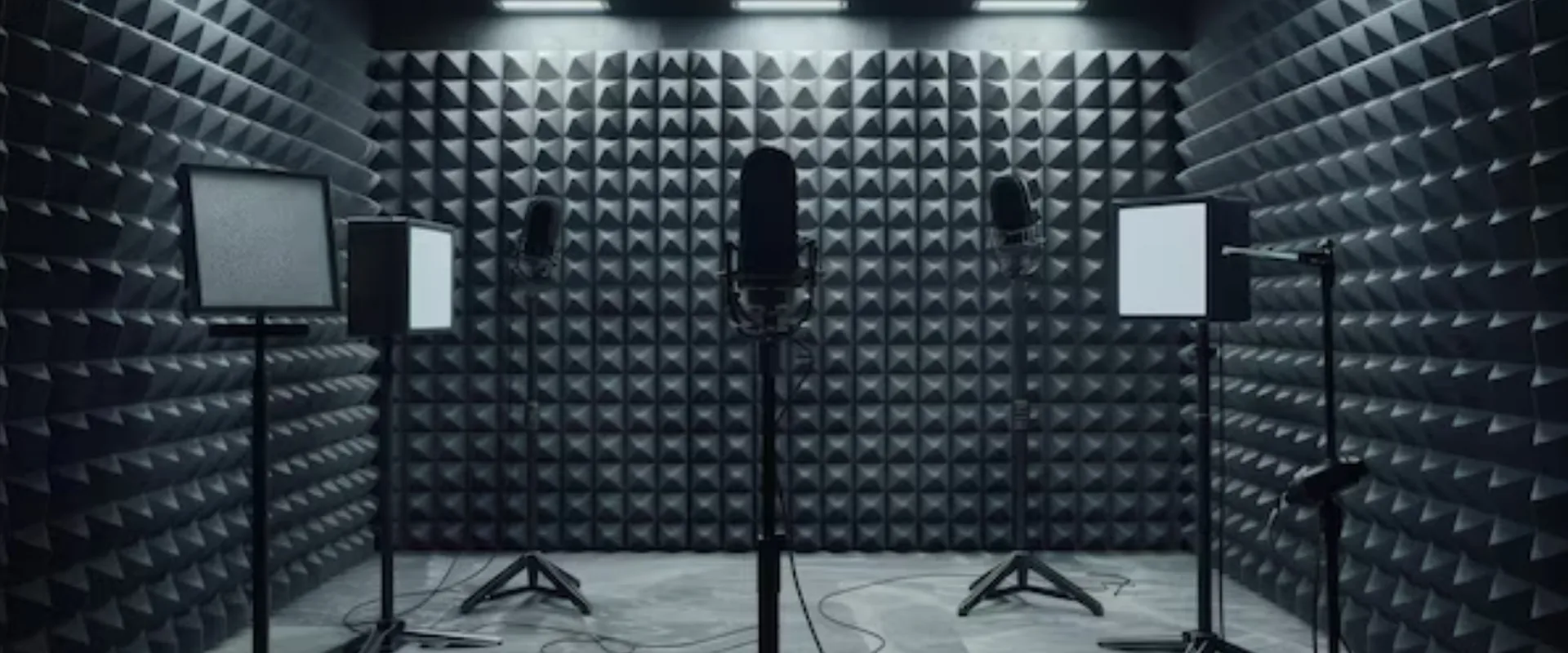
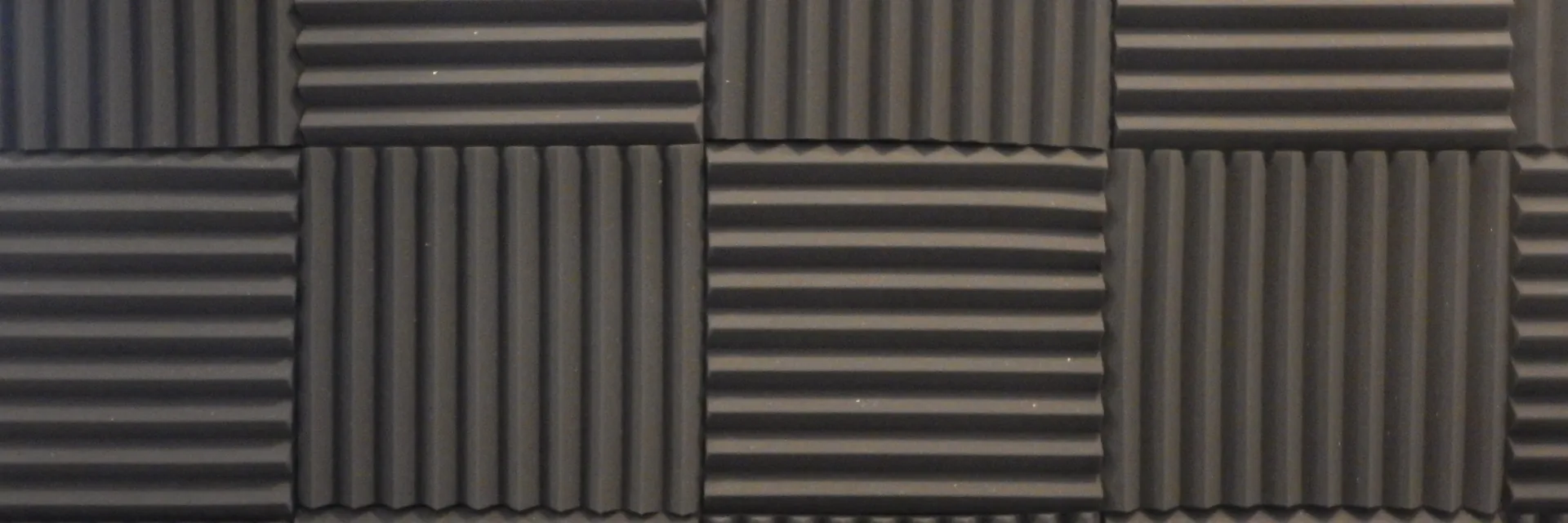
One contract for the whole room. We produce the acoustic design, construct the chamber, install absorbers, doors, isolation, and services, and measure the finished room before handover.
The client deals with one project engineer and one commercial agreement instead of coordinating separate acoustic consultants, general contractors, absorber suppliers, and commissioning agents.
One accountable party for the acoustic result, so there is no gap between design intent and installed performance
A single schedule and a single point of escalation from kickoff through handover
Measured verification data delivered with the room, ready to support internal quality records and laboratory audits
A finished treated room — absorbers, isolation detailing, and services closed out as one envelope
Supporting services
Every part of the acoustic envelope
A chamber is only as good as its weakest detail. Each service below exists because it is a place where anechoic performance is commonly lost.
02
Semi-anechoic and hemi-anechoic chambers
Chambers with absorptive walls and ceiling and a reflective floor plane, built for equipment that cannot be suspended or that must be measured in a ground-reflective condition. Typical installations include appliance and machinery sound power testing, vehicle and component NVH work, and larger products that need to be rolled in on their own wheels or a cart.
Client benefits
Realistic ground-reflection measurement conditions for heavy or floor-standing products
Load-rated floor construction designed around the client's actual test article and handling equipment
Treatment depth matched to the lowest frequency the program needs, so budget is not spent on absorption the program will never use
03
RF and EMC shielded chamber construction
Shielded enclosures lined with radio-absorbing material for radiated emission and immunity testing. We build the shielded shell, install the absorbing lining, and integrate the supporting infrastructure: filtered power entry, waveguide ventilation, signal penetration panels, turntable and antenna positioning provision, and control room separation.
Client benefits
A shielded envelope built and sealed to hold its attenuation performance at seams, doors, and penetrations
Infrastructure coordinated from the start — filters, vents, penetrations, and grounding designed with the enclosure rather than retrofitted into it
Verification measurement of the finished enclosure against the attenuation target agreed in the proposal
04
Acoustic feasibility and performance prediction
The study stage that keeps a chamber project from going wrong. We review the proposed space, ceiling height, structural conditions, access routes, available power, and adjacent noise sources, then model the room's expected free-field deviation, background noise level, and usable quiet-zone size. The output is a written performance target and a room geometry the client can take to their own stakeholders.
Client benefits
Target performance numbers in writing before any construction money is committed
Early warning when a chosen space cannot support the intended frequency range or quiet-zone size
A buildable layout that accounts for absorber depth, door swings, access, and service clearances
05
Vibration isolation and floating floor systems
Structural noise is the failure mode that ruins otherwise well-built chambers. We design and install decoupled inner shells on resilient mounts, isolated floating floor slabs, and isolation breaks at every point where the chamber would otherwise touch the host building.
Client benefits
Low-frequency performance protected against foot traffic, mechanical equipment, and nearby road vibration
Isolation detail coordinated with the structural engineer so the host building stays code-compliant
Fewer post-handover complaints from measurements that drift when the building is busy
06
Acoustic doors, windows, and penetration sealing
Doors, observation windows, cable ways, duct penetrations, and instrument ports are the weakest links in any acoustic envelope. We supply and install gasketed acoustic door assemblies, double-glazed observation windows, and sealed penetration details, and we acoustically caulk every seam, joint, and service opening in the treated envelope.
Client benefits
Door and penetration performance matched to the chamber's specified isolation so the envelope has no weak point
Access designed for the test article: clear opening widths, thresholds, and swing directions chosen around real handling needs
Sealing work performed by the same installers who set the absorbers, so the responsibility for leaks is unambiguous
07
Silenced ventilation and in-chamber services
Chambers need air, light, and power without letting noise and vibration in with them. We design silenced supply and return air paths, low-noise lighting, internal electrical distribution, and instrumentation routing that maintains the acoustic envelope and keeps the operator comfortable inside the test volume.
Client benefits
Ventilation that delivers thermal control and air exchange without adding measurable background noise
Lighting and power laid out for how the test is actually run, including instrument and operator positions
Internal conditions suitable for extended manned test sessions, not just short automated runs
08
Chamber retrofit, relocation, and re-verification
Existing chambers can be brought back to specification or moved to a new building. We assess the current room, identify where performance has been lost, repair or replace absorptive and isolation components, rebuild enclosures in new premises, and re-measure the result.
Client benefits
Underperforming rooms returned to their original specification at a fraction of new-build cost
Facility moves made without abandoning a substantial acoustic asset
Fresh verification data for rooms whose original documentation can no longer be traced
Verification — 09
Performance you can point at
Background noise level, free-field deviation, and quiet-zone uniformity are measured in the finished room with ventilation running, then documented in a verification report that becomes the baseline for the life of the chamber.
Commissioning measurements and an ongoing service relationship for chambers already in operation. We produce a documented performance report and offer scheduled inspection of door gaskets, absorber condition, sealing, and isolation components.
Verification records that support internal quality systems and customer audit requests
Early detection of gasket wear, absorber damage, and seal degradation before measurements are affected
A predictable maintenance schedule instead of emergency repairs discovered during a critical test campaign
Start with the test program, not the room size
Tell us what you need to measure, and we will tell you what chamber it takes. Target performance appears in the proposal before you commit to construction.